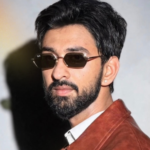

What if the internet is simultaneously the reason behind your loneliness and the only place where you feel at home? Delhi-based singer-songwriter Apoorva Malik, performing through her entirely digital alter ego Nevara, explores this contradiction in her newly released single ‘Static In My Head’, a hyperpop collaboration with producer Hautewulf (Mohan Kumar). Released on November 27, the track is the second single from Nevara’s upcoming debut album, Age of Almost, scheduled to arrive in April 2027. But this release is more than just another new single. Nevara has built an entire fictional universe around the song, turning its release into an intriguing digital experience. On November 27, her official website, Nevaraverse.com, transformed into a satirical Black Friday shopping store where some of the most valuable things in modern life — comfort, dreams, a quiet mind and attention span — are marked as sold out. The only thing still available is the song itself. It’s an imaginative marketing concept that reflects the track’s central theme: an internet that constantly demands our attention while leaving us emotionally exhausted. A song about being connected to everyone but feeling alone At its heart, ‘Static In My Head’ examines the complicated relationship people have developed with social media and the internet. From endless scrolling and algorithm-driven feeds to digital friendships and the pressure of maintaining an online identity, the song captures the experience of growing up in a world where switching off has become increasingly difficult. Interestingly, the idea comes from Apoorva’s own childhood. Growing up in a joint family, she shared a single computer with her siblings and cousins. Her earliest internet memories include gaming lobbies, Age of Empires, Need for Speed, Orkut, YouTube and Tumblr. Back then, discovering the internet meant actively searching for communities, conversations and experiences. Today, algorithms increasingly decide what appears on our screens. That contrast became one of the song’s biggest creative inspirations. Apoorva explores how the internet has evolved from a place of discovery into an endless stream of recommendations, advertisements and repetitive content. The lyrics touch upon the commercialisation of emotions, online validation and the strange feeling of finding comfort in something that simultaneously overwhelms us. One of the most striking ideas behind the track is captured in its central sentiment: the noise inside your head can somehow become a source of calm. Rather than preaching about deleting social media or abandoning the digital world, Nevara acknowledges the contradiction and gives a voice to people experiencing it. How Nevara and Hautewulf recreated the internet through sound Musically, the track takes a noticeably different direction from Nevara’s debut single, ‘Almost Famous’, which arrived in September 2026. While the earlier release carried a late-2000s dance-pop influence, ‘Static In My Head’ dives into faster, louder and more chaotic hyperpop territory. Produced by Hautewulf, the song combines energetic electronic beats, glitch-inspired effects, digital interruptions and catchy pop hooks. Its sonic direction draws inspiration from artists such as PinkPantheress and Charli XCX. However, one of its most interesting creative decisions is the contrast between the production and the vocals. Despite the busy, almost overwhelming instrumental, Nevara’s vocal delivery remains soft and composed, as though she is completely comfortable inside the digital chaos surrounding her. The production also features several details designed to imitate the internet itself. At the end of each chorus, the word ‘internet’ glitches into fragmented sounds, resembling a failing video connection. Before the second chorus, the instrumentation disappears, allowing the vocal to emerge with an old-radio-like quality. During the bridge, the word ‘scrolled’ stretches across approximately twelve seconds while the instrumental gradually builds underneath it, creating the sensation of a webpage struggling to load before everything returns for the final chorus. The track’s vocal production is handled by Jon Asher, whose credits include Britney Spears and The Chainsmokers, while Akash Shravan, who has worked on Dhurandhar and with Hanumankind, is responsible for mixing and mastering. The release is independently issued under Nevaraverse. Who exactly is Nevara? The story behind Apoorva Malik’s digital alter ego Nevara is not a traditional pop artist with an ordinary stage identity. She is the entirely online alter ego of Apoorva Malik, a Delhi-based singer-songwriter who has performed at more than 200 live shows across India and internationally. According to Nevara’s fictional backstory, Apoorva uploaded her creative self onto a separate digital drive. When the connection was eventually disconnected, Nevara continued operating independently in the cloud. She exists entirely online, communicates through screens and has never performed before a physical audience. This concept gives the music project an additional layer of storytelling. Nevara is not simply a virtual identity attached to a collection of songs; she has her own fictional history, personality and relationship with the internet. Even the promotional campaign for ‘Static In My Head’ expands that universe. Apoorva revealed that people have been sharing their old usernames from Orkut, MSN and online games with Nevara, effectively lending her the digital childhood she never experienced herself. Before creating Nevara, Apoorva was also one half of the pop duo Kairose and appeared as a Top 20 contestant on Colors Infinity’s The Stage Season 3. Her experience performing across India, the UAE, Bahrain, Kenya, Thailand and Vietnam adds another dimension to a project that deliberately keeps its central pop persona away from physical performances. A visualiser inspired by an iconic childhood computer memory Instead of releasing a conventional music video, Nevara has opted for a visualiser that draws inspiration from the classic DVD screensaver. The concept features Nevara’s face bouncing around a black screen, continuously approaching the corners but never actually hitting one. According to Apoorva, the face comes remarkably close to the corner three times, including once by just fourteen pixels during the musical drop. The visual metaphor connects directly to the larger concept behind Age of Almost: constantly approaching something, feeling as though you are nearly there, but never quite reaching it. The visualiser also contains hidden details, encouraging viewers to watch until the very end. Much like the song itself, the seemingly

Punjabi singer Arrshan Basaati has released his latest track, ‘Mehandiyan’, adding another release to his growing music catalogue. The song arrived on November 20, 2026, under the BlackEra Studioz banner and features The Sam and Waras alongside Arrshan Basaati in its official music credits on streaming platforms. With a runtime of 3 minutes and 40 seconds, the new single is now available on digital music platforms. The release follows Arrshan Basaati’s previous tracks, including ‘Dil Lai Ja’ and ‘Fragrance’. Released in June 2025, ‘Dil Lai Ja’ featured Kulshan Sandhu and Zora Ahluwalia, with Arrshan Basaati credited as its singer and composer, Kulshan Sandhu handling the music, and Zora Ahluwalia writing the lyrics. Its official music video, featuring Khushi Verma, has crossed 27 million views on YouTube, marking a notable milestone for the singer. Another release, ‘Fragrance’, arrived in July 2025, with music composed by Kulshan Sandhu and lyrics written by Jora Ahluwalia. These releases have helped build Arrshan Basaati’s presence in the Punjabi music space, with ‘Mehandiyan’ now becoming his latest offering. With ‘Mehandiyan’, Arrshan Basaati continues to add new music to his discography. The track gives listeners another opportunity to explore his musical work, while its release follows two of his previously released songs that have gained attention among Punjabi music listeners.

Shashaa Tirupati is pushing the boundaries of Indian independent music with ‘MAAHIRR’, a four-track EP created in collaboration with producer and sound architect Shabeer. With the release of its final two compositions, ‘Kaisay’ and ‘Chakkee’, the project is now complete, bringing together four interconnected musical experiences. Featuring ‘Heerrr’ and ‘Raynnn’ alongside the newly released tracks, MAAHIRR explores the evolving dimensions of love, taking listeners through romantic excitement, emotional attachment, jealousy, vulnerability and ultimately self-realisation. What makes the project particularly distinctive is its approach to music, moving beyond conventional genre boundaries. The creative vision behind MAAHIRR lies in the way Shashaa and Shabeer bring Hindustani classical traditions and electronic production together as equally important elements of the compositions. ‘Kaisay’ explores the emotionally restless side of love, incorporating Raag Bhairavi, Raag Kirwani and thumri-inspired expressions over contemporary electronic soundscapes. The composition captures the complexities of distance, insecurity and jealousy, with Shashaa delivering an expressive solo performance that moves between confrontation and longing. Moving beyond romantic storytelling, ‘Chakkee’ serves as the philosophical conclusion to the EP, drawing inspiration from the poetry of Kabir. Featuring Digvijay Singh Pariyar, the track explores the connection between personal suffering, empathy and the deeper meaning of love. Its musical foundation is rooted in Raag Todi, complemented by a meditative drone and carefully layered arrangements. Drawing on Kabir’s traditional millstone metaphor, the composition reflects on life’s continuous struggles and the experiences that shape human relationships. Another defining aspect of the EP is its focus on vocal authenticity. Shashaa has revealed that MAAHIRR uses minimal pitch correction, allowing natural vocal expressions to remain at the forefront rather than relying heavily on Auto-Tune. The four compositions are also connected through carefully designed intros and outros, creating a seamless listening experience. While Shabeer views MAAHIRR as a transition from day to night, Shashaa interprets it as a reflection of the different stages of love. These contrasting perspectives complement each other and contribute to the project’s distinctive identity. For Shashaa Tirupati, MAAHIRR marks another significant milestone in her journey as an independent artist. The National Film Award-winning vocalist, widely recognised for her collaboration with A. R. Rahman on ‘Vaan Varuvan’ from Kaatru Veliyidai, has consistently showcased her versatility across languages and musical styles. With Shabeer bringing his experimental production sensibilities to the project, the duo have created something that extends beyond a conventional classical-electronic crossover. Rather than simply combining two musical styles, MAAHIRR attempts to establish an entirely distinct musical language, offering a fresh direction for Indian independent music.

Canada-based independent singer-songwriter and composer Zaahir is bringing a different creative perspective to Punjabi and contemporary music with his latest release, ‘Jafaa’. Moving beyond conventional genre boundaries, the artist combines an evolving cinematic composition with an abstract visual narrative, creating an audiovisual experience that goes beyond the format of a traditional music video. Drawing inspiration from Punjabi and South Asian musical roots while exploring alternative, indie rock, R&B and contemporary sounds, Zaahir continues to develop an artistic identity that refuses to be defined by a single language or genre. Produced by Enlightened, ‘Jafaa’ explores the complexities of human relationships, touching upon cruelty, suffering, vulnerability and emotional conflict. What makes the composition stand out is its gradual musical progression. Built around layered orchestral textures, rhythmic elements and atmospheric arrangements, the production steadily develops in intensity, giving the track a cinematic character that feels closer to a film score than a conventional song. Enlightened’s production plays a crucial role in shaping this experience, allowing the different musical elements to come together as one cohesive composition. Taking the project beyond its musical dimensions, director Arsh Soni gives ‘Jafaa’ a distinctive visual identity through an abstract and unconventional official music video. Instead of following predictable music-video storytelling, the direction explores imagery, symbolism and atmosphere to interpret the emotions behind the composition. The visuals do not simply accompany the music; they expand its narrative, offering viewers another perspective on the themes explored through sound. Skypeace Productions also receives a special acknowledgement for being part of bringing this creative vision to life. For Zaahir, Punjabi is an important part of his cultural and musical identity, but it does not define the limits of his artistic ambitions. His approach places storytelling and emotional connection above conventional genre classifications, allowing different influences to shape each composition according to its creative requirements. This openness towards experimentation reflects a wider ambition to create music that can connect with listeners across cultures, languages and geographical boundaries. With ‘Jafaa’, Zaahir presents more than just another independent music release. It is an exploration of how music production and visual direction can work together to create a larger artistic experience. With Enlightened shaping its cinematic sound and Arsh Soni translating its emotions into an abstract visual narrative, the project highlights the creative possibilities of independent music. Could Zaahir’s genre-crossing approach be the beginning of a distinctive new identity in the evolving independent Punjabi music landscape?

Punjabi artist Zaahir is redefining the sound and visual identity of Punjabi music with “Meri Thaa’n,” bringing together indie-rock influences, cross-cultural creativity and a cinematic storytelling approach. Punjabi music continues to find new ways to evolve, and Vancouver-based artist Zaahir is taking an unconventional route with his latest release, “Meri Thaa’n.” Released on 31 August 2026, the track is more than an emotional record about heartbreak and inner conflict. Originally written around 2022, the song went through years of creative development before taking shape as an indie-rock Punjabi production with a distinctive sound and cinematic visual identity. Rather than following the familiar Punjabi music formula, Zaahir chose to embrace experimentation, giving the language and its musical roots a fresh creative direction. One of the most interesting aspects of “Meri Thaa’n” is the collaboration behind its music video. Director Yaw Obrenu Yamoah, introduced to Zaahir through their mutual friend Abby, immediately connected with the track and envisioned its visual possibilities. His filmmaking experience as a director, writer, actor and model helped shape the project into something beyond a conventional music video. The creative team also incorporated a custom wooden installation designed by Hans Senger, which became a significant part of the video’s distorted, almost dystopian atmosphere. The visual concept explores internal struggles, emotional entanglement and the psychological space between two people, allowing the performances and atmosphere to tell the story without relying on excessive glamour or spectacle. Musically, the record brings together an impressive creative team, including producer Krn Walia, guitarist Timothy Neuhaus, Justin Hicks and the wider production and engineering team. The collaboration also represents something bigger than a musical experiment. Coming from different cultural backgrounds, Zaahir and Yaw found common ground through their shared understanding of cultural expectations, limitations and personal conditioning. Instead of allowing those differences to become barriers, they used art as a common language to build something distinctive. For Zaahir, the vision is clear: Punjabi music should not be restricted by expectations of how it should sound or look. Building his artistic identity in Vancouver, a city known for its multicultural creative environment, he wants to take Punjabi music into unexplored territory while preserving its emotional depth and cultural identity. With “Meri Thaa’n,” he delivers a strong statement about artistic freedom, international collaboration and the possibilities of Punjabi music on a global stage. The ambition isn’t to move away from Punjabi culture, but to take it somewhere new.