
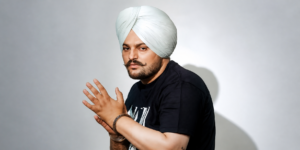
The rapper-producer marks a landmark day with record-breaking digital achievements driven entirely by organic audience engagement Indian music star Yo Yo Honey Singh reached a significant turning point in his career after achieving two major digital milestones in a single day. His widely celebrated track Blue Eyes crossed the 800 million views mark, becoming the most-viewed song in his discography, while his ambitious project 51 Glorious Days surpassed 100 million streams. Notably, the latter feat was achieved without any paid promotional campaigns, underscoring the power of organic listener engagement. The dual accomplishment highlights Honey Singh’s enduring relevance in a fast-evolving music landscape. “Blue Eyes,” a track that has remained a fan favorite since its release, continues to attract listeners across generations. Its crossing of 800 million views represents more than just a numerical milestone—it reflects the sustained popularity of a song that has managed to stay culturally resonant long after its debut. The track’s blend of catchy composition and distinctive style helped cement Honey Singh’s position as one of India’s most recognizable music figures, and its continued growth suggests that its appeal has not waned over time. Equally significant is the performance of “51 Glorious Days,” a project that stands out for both its scale and its strategy. Comprising an extensive collection of tracks, the project reflects Honey Singh’s willingness to experiment with format and volume in an era dominated by shorter releases and rapid content cycles. Crossing 100 million streams is an achievement in itself, but what makes this milestone particularly noteworthy is the manner in which it was accomplished. Unlike many contemporary releases that rely heavily on marketing budgets, playlist placements, and sponsored promotions, “51 Glorious Days” reached its audience purely through organic means. Listener-driven discovery, word-of-mouth sharing, and genuine fan engagement played a central role in pushing the project past the 100 million mark. This organic success signals a strong and loyal fan base that continues to actively support Honey Singh’s work without external prompting. Industry observers often point to the growing influence of algorithm-driven exposure and paid campaigns in determining a project’s reach. In this context, the success of “51 Glorious Days” offers a contrasting narrative—one where content itself drives consumption. It suggests that even in a crowded digital ecosystem, established artists can still command attention through authenticity and connection with their audience. For Honey Singh, these milestones arrive as a reaffirmation of his position within the music industry. Over the years, his career has seen both immense highs and challenging phases, but the current achievements indicate a renewed momentum. The simultaneous success of an older hit like “Blue Eyes” and a newer, large-scale project like “51 Glorious Days” demonstrates his ability to bridge different phases of his musical journey while maintaining audience interest. Moreover, the scale of these achievements reflects broader trends in digital music consumption. Streaming platforms and video-sharing services have transformed how audiences engage with music, enabling songs to accumulate views and streams over extended periods. In this environment, longevity becomes as important as initial impact, and “Blue Eyes” serves as a prime example of a track that continues to thrive years after its release. Similarly, the performance of “51 Glorious Days” highlights the potential of unconventional release strategies. By offering a large body of work and allowing listeners to engage with it at their own pace, Honey Singh tapped into a model that prioritizes sustained listening over immediate chart dominance. The absence of promotional spending further emphasizes the authenticity of the project’s reach, suggesting that its success is rooted in genuine audience interest rather than external amplification. Taken together, these milestones mark a defining moment in Yo Yo Honey Singh’s career, reinforcing his influence in India’s digital music space. As “Blue Eyes” continues to climb and “51 Glorious Days” gains further traction, the achievements point toward a future where audience connection and organic growth remain central to success. For an artist who has long been associated with chart-topping hits, this moment underscores not just past glory, but an evolving presence that continues to resonate with listeners worldwide.

A fresh wave of global attention has propelled “Eyes On Me,” a track by Sidhu Moosewala, into the spotlight as it trends across ten countries simultaneously. The surge marks another significant moment in the late artist’s enduring international appeal, underscoring the sustained reach of his music beyond regional boundaries. The track’s widespread traction reflects a growing global audience for Punjabi music, with Moosewala’s work continuing to resonate strongly across diverse markets. While specific regions were not detailed, trending in multiple countries at once signals a coordinated spike in streaming, social media engagement, and listener interest. Since his passing, Moosewala’s releases have repeatedly demonstrated a rare staying power, bridging cultural and linguistic divides. “Eyes On Me” appears to follow that pattern, gaining momentum organically and reinforcing his status as one of the most influential voices in contemporary Punjabi music. The continued success of his music points to a legacy that remains firmly intact. As audiences across continents engage with his work, Moosewala’s presence in the global music landscape shows little sign of fading, with each release further cementing his posthumous impact.

A meticulously crafted production backed by Sandeep Rehaan brings together a large creative team for a high-concept music video release Punjabi music star has released his latest track, Top Fella, a project that sees him take on multiple creative roles as singer, lyricist, and composer. The song, presented by Karan Aujla in collaboration with producer Sandeep Rehaan, features music by Mrci and arrives with a visually ambitious video directed by Mani Mallhi. With a detailed production setup and an extensive crew spanning multiple departments, the release underscores the growing scale and sophistication of contemporary Punjabi music videos. Top Fella reflects Karan Aujla continued evolution as a multi-dimensional artist, reinforcing his ability to control both the sonic and lyrical identity of his work. By writing, composing, and performing the track himself,Karan Aujla maintains a consistent artistic voice throughout the project. The music, produced by Mrci, complements this approach with a soundscape designed to match the track’s tone and narrative direction. The video, conceptualized and directed by Mani Mallhi, plays a central role in shaping the project’s overall impact. Mallhi, who also handled the screenplay, brings a structured visual narrative that aligns closely with the song’s themes. The execution relies heavily on technical precision, with cinematography led by director of photography Abhimanyu Sengupta. His work is further supported by assistant Razak, ensuring a cohesive visual language across the production. Post-production emerges as a key strength of the project. Editing was handled by Team Brownwest, while color grading by Sujith Vijayan adds a polished finish that enhances the video’s cinematic appeal. The visual effects segment, overseen by VFX supervisor Jskrn, is particularly notable for its scale. Multiple studios and artists contributed to this effort, including Pinnacle Studios, Matt Lau, and Fury Compositing. A team of compositing artists—Tyler Brooks, Lucas, Jskrn, Piyush Verma, Taranjot Kaur, Rahul Mahto, Alok Raj, and Nathan Cole—worked collaboratively to bring complex visual sequences to life. The integration of 3D elements further expands the video’s visual scope, with artists such as Lucas, Piyush Verma, Nathan Cole, and Manav Negi contributing to this dimension. Supporting roles in roto and paint work, handled by Taranjot Kaur, ensure seamless blending of effects with live-action footage. This layered approach to post-production highlights the technical ambition behind Top Fella. Behind the scenes, the production infrastructure reflects a well-coordinated effort. Abdul Vahid M served as line producer, managing on-ground logistics, while Rahul Sehal took on the role of executive producer. The production itself was carried out under RS Films and Production, with a team of assistant directors led by Naman D. Pendurkar and Ankush Prasad supporting the direction process. Styling and visual presentation were given significant attention. Costume design was led by Jasmine Kamboj, with Denish Hamirani assisting as the second costume stylist. A team of costume assistants—including Muskan Gadhiya, Khushi Arora, Pallavi, Rajat Kamra, and Amber—ensured continuity and detail across different looks. The choreography, handled by Vasim-Sufi with assistance from Nikhil Shetty, adds movement and energy to the video, complementing the song’s rhythm and pacing. The production design team, headed by Tajamul Shaikh (Taj), along with art director Ismail Shaikh and assistants Ashwini Rajbhoj, Gautam Jadhav, and Ishaq Shaikh, constructed the visual environments that support the narrative. Lighting, managed by gaffer Saddam Ali, plays a crucial role in shaping the mood of each frame. Meanwhile, production managers Kakka, Badal, and Gulshan coordinated logistical elements to keep the project running smoothly. Action sequences, where present, were directed by Ajay Thakur, supported by the 11 Action Stunt team. These elements contribute to the video’s dynamic quality, adding intensity and visual variation without overshadowing the song itself. The project also benefits from a structured promotional and digital strategy. LA Music serves as the digital partner and marketing force behind the release, with LA Music Promotions Co. handling outreach and visibility. This coordinated effort ensures that Top Fella reaches a broad audience across digital platforms, reflecting the increasing importance of marketing infrastructure in music releases. Special acknowledgment has been given to Qarn Mallhi for contributions to the project, highlighting the collaborative nature of the production. With Top Fella, Karan Aujla delivers a release that combines musical consistency with high-end visual execution. The project stands as an example of how modern Punjabi music continues to scale up in both production quality and creative ambition. Backed by a large and specialized team, the song not only reinforcesKaran Aujla position in the industry but also signals a continued shift toward more cinematic, detail-oriented music video storytelling.
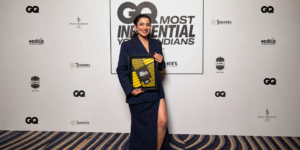
Jasmine Sandlas has secured a place among the “Most Influential Young Indians 2026,” marking a significant turning point in her career. Known for her unconventional approach and bold artistic identity, Sandlas has transitioned from being labeled an industry outsider to becoming one of its most compelling voices—earning recognition that the music world can no longer overlook. For years, Sandlas cultivated a reputation as a rulebreaker, challenging norms with her distinct style and unapologetic expression. Rather than conforming to traditional expectations, she carved her own path, building a loyal audience that resonated with her authenticity. This independent streak, once seen as a barrier to mainstream acceptance, has now become the very foundation of her influence. Her inclusion in the 2026 list reflects not just popularity, but a broader cultural impact. Sandlas represents a new wave of artists who are redefining success on their own terms—where individuality, creative control, and direct audience connection matter as much as commercial metrics. Her journey underscores a shift within the industry, where voices that once stood on the margins are now shaping the center. The recognition also signals a changing attitude within the entertainment landscape. Artists who challenge conventions are no longer sidelined but increasingly celebrated for pushing boundaries and expanding the scope of mainstream culture. Sandlas’s rise exemplifies this evolution, highlighting how persistence and authenticity can eventually command respect. As the industry continues to adapt to new creative dynamics, Jasmine Sandlas’s story stands as a clear indicator of what influence looks like today. No longer defined by labels of rebellion alone, she now occupies a space where her impact is both acknowledged and undeniable—suggesting that her presence will only grow stronger in the years ahead.
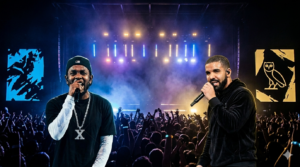
The “Cold War” of modern music has officially reached a boiling point. As of April 2026, the strategic chess match between Drake and Kendrick Lamar has evolved from a lyrical dispute into a global cultural phenomenon that dominates search engines and defines the current era of entertainment. The 2026 Resurgence: Why the World is Watching. In the high-stakes theater of global hip-hop, few narratives carry as much weight as the tension between Toronto’s Aubrey “Drake” Graham and Compton’s Kendrick Lamar. While their history of “subliminal shots” dates back over a decade, April 2026 has marked a historic peak in public interest. According to the latest global analytics, the combined search volume for these two artists has surpassed nearly every other musical act worldwide this year. Drake continues to lead in raw volume with approximately 19.6 million monthly searches, while Kendrick Lamar’s recent historical milestones have kept him trending at a steady 3.8 million monthly searches. This isn’t just a “beef”; it is a battle for the soul and the future of the genre. The “Iceman” Protocol: Drake’s Digital Empire Drake has long been the undisputed king of commercial viability, but his 2026 campaign for his ninth studio album, Iceman (scheduled for a May 15 release), has set a new benchmark for music marketing. By utilizing high-concept “stunt marketing”—including a massive 25-foot ice sculpture in downtown Toronto—Drake has ensured his name remains at the top of the Google Trends charts. Early previews of the album suggest a “chilled,” more calculated lyrical approach. Critics who have heard the lead single, “What Did I Miss?”, claim it contains sharp, coded references to his 2024 fallout with the West Coast. Drake’s ability to turn a personal rivalry into a viral marketing engine is precisely why his daily search spikes can reach as high as 6.5 million during major announcement windows. He isn’t just releasing music; he is managing a global conversation. Kendrick Lamar: The Architect of the 26th Grammy Win While Drake dominates the charts through sheer volume, Kendrick Lamar has spent the first quarter of 2026 solidifying his status as the “GOAT” (Greatest of All Time) through critical acclaim. In February 2026, Lamar made history by winning his 26th Grammy Award, officially surpassing Jay-Z to become the most decorated rapper in the history of the Recording Academy. Kendrick’s strategy remains the polar opposite of Drake’s. He thrives on silence and scarcity. However, in April 2026, that silence was broken by persistent rumors of a project titled Fireman. Fans have theorized that this is a direct, elemental response to Drake’s Iceman. Even without an official confirmation, the mere speculation of a Kendrick response has caused his search interest to jump by nearly 400% in the last 30 days. Global Search & Performance Analysis: 2026 Snapshot To understand the scale of this rivalry, we must look at the comparative data from April 2026. In terms of global search volume, Drake currently holds a significant lead with 19,622,361 monthly searches, placing him as the 4th most searched person on the planet. His focus remains the global rollout of the Iceman album, utilizing viral, social-media-driven marketing. Kendrick Lamar, while holding a lower volume of 3.8 million monthly searches, dominates the “Sentiment and Impact” category. Following his Record of the Year win for the track “Luther” (with SZA), his engagement rates are at an all-time high. While Drake’s marketing is direct and loud, Kendrick’s impact is elusive and event-based, relying on his status as the “cultural architect” of hip-hop. The Cultural Divide: Two Visions for Hip-Hop The reason this rivalry ranks so highly on Google is that it touches on a fundamental debate: Commercial Dominance vs. Artistic Integrity. 1.The Drake Model: Represents the globalization of hip-hop. It is polished, fashion-forward, and integrated with the luxury lifestyle. It’s about the “Numbers”—the streams, the sales, and the status. 2. The Kendrick Model: Represents the roots of the culture. It is dense, lyrical, and socially conscious. It’s about the “Message“—the legacy, the storytelling, and the technical skill. In 2026, the audience is no longer satisfied with just listening to the music; they want to pick a side. This “Fanbase War” is the engine that drives millions of clicks, making this topic a goldmine for digital publishers Looking Ahead: The May 15 Collision As the countdown to the Iceman release begins, all eyes are on Kendrick Lamar. In the world of high-stakes rap, timing is everything. If Kendrick drops a surprise response or his rumored Fireman project on the same day Drake drops his album, it could trigger the single largest day of music streaming in history. Conclusion Whether you prefer the hit-making machinery of the OVO camp or the Pulitzer-prize-winning depth of pgLang, there is no denying that Drake and Kendrick Lamar are the twin suns around which the musical world orbits in 2026. This rivalry has done more than just generate headlines; it has revitalized the competitive spirit of hip-hop, ensuring that the genre remains the most dominant force in global culture. Join the Global Debate: As we wait for the potential collision of Iceman and Fireman, we want to hear from you. Do you think a lyrical battle in 2026 is still about the music, or has it become a game of social media marketing? Share your analysis with us in the comment section below