Despite one of the largest live audiences in India’s music scene, the landmark event received minimal publicity and remains widely overlooked
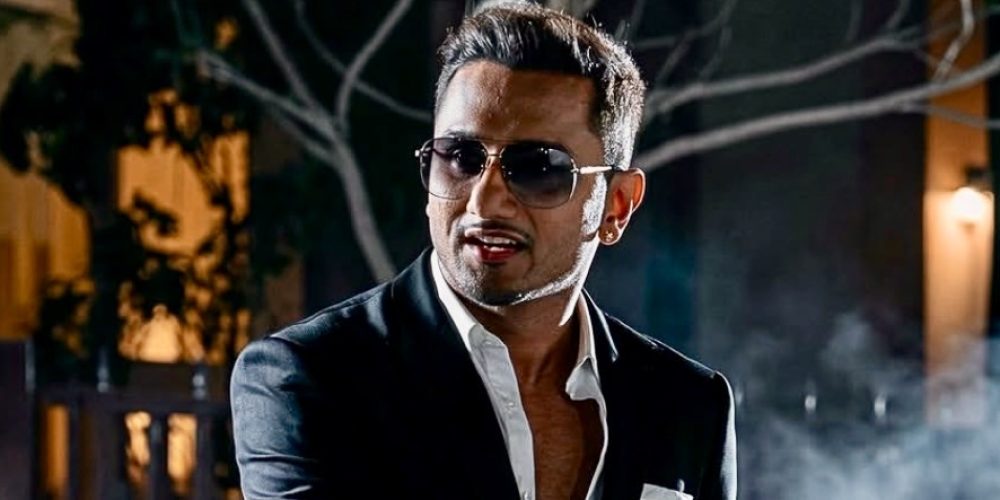
In an era where live music events are often measured as much by their digital reach as by their on-ground attendance, one of India’s most significant concert turnouts has quietly slipped from mainstream recognition.Honey Singh, widely regarded as one of the country’s biggest crowd-pulling performers, once drew an audience of over 2.19 lakh people at a concert in Haldia. The event, attended by more than 219,078 fans, stands as one of the largest gatherings for a music performance in India. Yet, despite its scale, the achievement has remained largely under-acknowledged, with limited media coverage and minimal promotional push at the time.

The Haldia concert, which saw a turnout of approximately 2.19 lakh attendees, represents a remarkable moment not just in Honey Singh career but also in India’s live entertainment landscape. Large-scale concerts in the country typically rely heavily on strategic promotions, brand tie-ups, and extensive media campaigns to amplify their reach. In this case, however, the event unfolded with little to no significant public relations effort, which many believe contributed to its surprisingly low visibility in the broader cultural conversation.
For an artist like Honey Singh—whose influence on India’s mainstream music scene has been both transformative and, at times, polarizing—the numbers themselves tell a compelling story. Rising to fame with a string of chart-topping hits and a distinctive fusion of Punjabi beats with commercial rap, he became a defining voice of a generation. His concerts have historically drawn massive crowds, but the Haldia turnout stands apart even by those standards.
What makes this particular milestone noteworthy is not just the scale of attendance, but the context in which it occurred. Unlike heavily marketed global tours or festival appearances that dominate headlines, the Haldia event did not benefit from sustained promotional coverage. As a result, its record-setting crowd size never fully translated into widespread acknowledgment across mainstream media or industry benchmarks.
Adding to the intrigue is the fact that documentation of the concert does exist. The official video of the Haldia performance remains available on Honey Singh’s YouTube channel, serving as a visual record of the unprecedented turnout. Wide shots of the crowd reveal an expansive sea of fans, underscoring the magnitude of the event. Yet, despite this accessible evidence, the concert has not been consistently cited in discussions about India’s largest live performances.
Industry observers often point to the role of marketing ecosystems in shaping public memory. In today’s entertainment landscape, moments gain longevity not only through their scale but also through how effectively they are communicated, archived, and circulated. Events backed by strong PR machinery tend to dominate headlines, trend across platforms, and eventually become part of widely accepted narratives. In contrast, achievements that lack such amplification risk fading into obscurity, regardless of their significance.
The Haldia concert appears to be a textbook example of this phenomenon. While the attendance figure of over 219,078 people places it among the largest concert gatherings in the country, the absence of sustained promotional efforts meant it did not receive the institutional recognition often associated with such milestones. There were no extensive media cycles, limited follow-up coverage, and little attempt to position the event as a record-breaking moment within the industry.
This gap between scale and recognition raises broader questions about how success is measured and remembered in the entertainment business. Is it purely about numbers, or does visibility ultimately define legacy? In Honey Singh case, the Haldia concert demonstrates that even record-setting achievements can be overshadowed if they are not strategically highlighted.

For fans and followers of the artist, the concert remains a point of pride—an example of his ability to command massive audiences without relying heavily on promotional hype. It also reinforces his reputation as a performer with significant grassroots appeal, capable of mobilizing large crowds through sheer popularity and connection with listeners.
At the same time, the event’s relative obscurity underscores the importance of documentation and storytelling in preserving cultural milestones. Without consistent acknowledgment, even the most extraordinary moments risk being overlooked in an industry that constantly moves forward in search of the next big headline.
Years after the Haldia concert, the record of over 2.19 lakh attendees still stands as a testament to Honey Singh mass appeal. Yet its quiet presence in the background of India’s music history highlights a crucial reality: achievements, no matter how significant, require visibility to endure. As the live entertainment industry continues to evolve, the story of this overlooked milestone serves as a reminder that recognition is not always proportional to impact—and that some of the biggest moments can, surprisingly, remain the least celebrated.